Advanced EPDM Thermostable Tube Compound
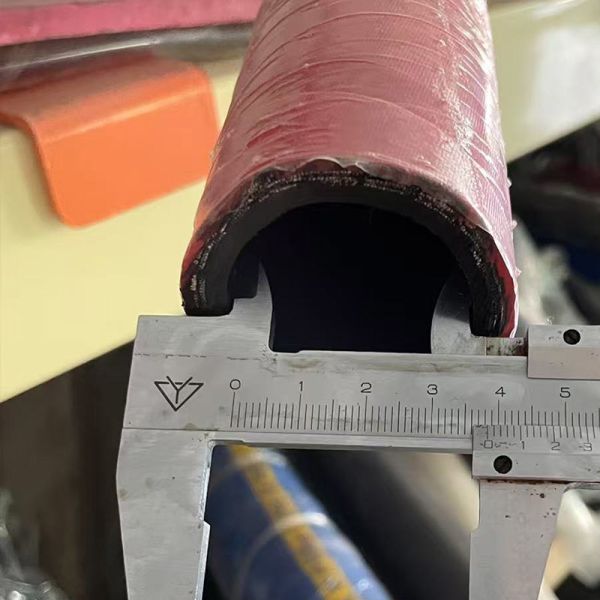
The hose utilizes a high-performance EPDM formulation designed to
maintain molecular integrity under continuous exposure to saturated
or superheated steam. The compound incorporates enhanced crosslink
density to resist thermal breakdown and maintain elasticity at
elevated temperatures. This structure also limits volumetric
expansion, ensuring consistent internal diameter under pressure.
The tube resists internal scaling, oxidation, and chemical
interaction with steam condensates, resulting in stable performance
across long duty cycles. Extended polymer stability minimizes
micro-cracking and tube embrittlement, two common failure modes in
general-grade steam hoses.
Dual Layer Steel Reinforcement With Controlled Torsional Behavior
The reinforcement architecture consists of dual braided steel
layers arranged to distribute axial and radial loads evenly
throughout the hose body. This design provides controlled torsional
rigidity that prevents kinking during handling while accommodating
natural curvature during deployment. The braiding angle is
optimized to reduce elongation under pressure, enabling predictable
stress behavior and improved safety margin during peak load events.
This reinforcement configuration also improves vibration
resistance, which is essential for applications where steam pulses
or system fluctuations can cause fatigue.
Heat Shielded Outer Cover With Enhanced Ozone and Abrasion
Protection
The outer layer is engineered from a heat-stabilized synthetic
rubber compound formulated to resist ozone degradation, ultraviolet
exposure, and surface abrasion. Industrial steam environments often
expose hoses to mechanical friction, elevated ambient temperatures,
and airborne contaminants; this cover reduces surface gouging and
prevents thermal oxidation that typically leads to cracking. The
cover’s thermal shielding structure reflects radiant heat, reducing
heat transfer to the reinforcement layers, and ensuring long
service life even when hoses are routed near boilers or heat
exchangers.
Reinforced Bonding Layer for Delamination Prevention
A specialized bonding compound is applied between the EPDM tube and
the steel reinforcement, enhancing layer adhesion and minimizing
shear displacement during thermal expansion. This bonding system
prevents internal separation when subjected to rapid pressure
spikes or sudden temperature transitions. By stabilizing interlayer
cohesion, the hose maintains structural integrity under repeated
operational cycles. The enhanced bonding also provides dimensional
stability at coupling ends, ensuring secure clamp or ferrule
engagement and reducing coupling-related fatigue failures.
Applications
High Temperature Thermal Transfer Lines
Steam hoses are extensively used in thermal transfer systems where
controlled heat distribution is required. Their ability to tolerate
elevated temperatures and maintain stable internal flow
characteristics supports efficient steam transport between boilers,
jacketed vessels, and reboilers.
Industrial Processing and Conditioning Systems
Many manufacturing sectors rely on steam for conditioning processes
such as curing, drying, heating, and fabric treatment. The hose’s
pressure stability and thermal endurance ensure precise steam
delivery without flow interruptions or energy loss.
Maintenance, Shutdown, and Purging Cycles in Utility Plants
During system startups, shutdowns, and flushing procedures, steam
hoses provide flexible temporary routing. Their ability to tolerate
frequent temperature changes ensures reliability in
high-variability environments.
Why Choose Hongruntong Marine
Precision Engineered Hoses Tailored for Thermal Stability
Hongruntong Marine applies advanced material selection and compound
formulation techniques to produce hoses optimized for
high-temperature durability. Each hose undergoes controlled
vulcanization to ensure uniform polymer crosslinking, minimizing
the risk of hot-spot degradation and extending operational
lifespan.
Comprehensive Testing Protocols for Pressure and Fatigue Resistance
Every steam hose is subjected to strict test procedures, including
hydrostatic pressure testing, cyclic thermal aging, burst testing,
and accelerated fatigue simulations. These protocols verify that
each batch meets exacting safety and performance standards required
by international industrial bodies.
Customizable Reinforcement and Coupling Engineering
Hongruntong Marine provides adaptable reinforcement layouts and
coupling solutions tailored to unique installation conditions.
Engineers collaborate with customers to determine ideal braid
geometry, coupling materials, and end-fitting configurations to
maximize operational reliability.
Proven Track Record Across Marine, Power, and Industrial Sectors
With extensive experience supplying steam systems for ships,
refineries, power plants, and manufacturing facilities, Hongruntong
Marine consistently demonstrates high reliability in demanding
environments. This cross-industry expertise ensures that each hose
solution is informed by practical field performance data.
FAQ
1. What is the maximum temperature the hose can withstand?
The hose is engineered for saturated and superheated steam
conditions and maintains structural integrity at high temperatures
due to its thermostable EPDM compound and reinforced bonding
system.
2. How often should steam hoses be inspected?
Inspection frequency depends on operating pressure and temperature
cycles, but routine checks for cover integrity, coupling security,
and dimensional stability are recommended to ensure optimal
performance.
3. Can the hose handle rapid temperature transitions?
Yes. The multi-layer construction and enhanced bonding system are
designed to resist delamination and stress cracking caused by
sudden thermal shifts, a common requirement in utility operations.
4. What type of couplings are recommended?
High-strength steel or brass couplings with steam-rated clamps or
ferrules are recommended. Coupling selection should match both hose
diameter and pressure rating for optimal safety.
5. Does the hose require special storage conditions?
The hose should be stored in a cool, dry, shaded environment away
from direct heat or ozone sources, ensuring maximum preservation of
the outer cover and internal elastomers.